Confirm the setup
Check the nominated players, eligible defender, goal, timing method, recording and who starts.
Umpire guide · checked 2 October 2026
Know the procedure, agree the roles and make every attempt feel the same.
A shoot-out is normally an eight-second one-on-one between an attacker and a defending goalkeeper or player with goalkeeping privileges. The exact administration—including who operates the clock, which goal is used and who may take part—comes from the competition regulations. Confirm those details before the series starts.
Check the nominated players, eligible defender, goal, timing method, recording and who starts.
The attacker starts outside the 23-metre area; the defender starts on or behind the goal-line between the posts.
The umpire signals; the clock and attempt start together. The attacker then has eight seconds.
Goal, time, offence, penalty stroke or ball out of play can end the attempt. Record it immediately.
Teams alternate. If still level after the initial series, use sudden death under the applicable regulations.
8 seconds
Under the standard FIH tournament procedure, an attempt ends when:
Two-umpire setup
This is a practical two-umpire allocation, not a universal rule. Agree it with the match official or competition organiser where one is present.
Without a separate timekeeper, this start-and-stop sequence is a practical way to work with two umpires. It is not a universal rule: where competition instructions allocate timing to a table official, reserve umpire or another official, follow those instructions.
Retake the shoot-out.
Award a penalty stroke.
End the attempt; no goal.
The standard FIH procedure uses yellow or red cards; no green card is used during the shoot-out competition.
Eligibility and replacement depend on the competition regulations. Stop and verify rather than guessing.
| Source | What it covers | Status |
|---|---|---|
| Rules of Hockey | Define offences, goals and penalty strokes during play. | Binding wherever the FIH Rules have been adopted. |
| Competition regulations | Define the shoot-out format, nominations, timing, eligibility and administration. | Binding for that competition. |
| Umpire briefing | Allocates tasks and positioning to the available officials. | Practical guidance unless incorporated into regulations. |
Optional tool
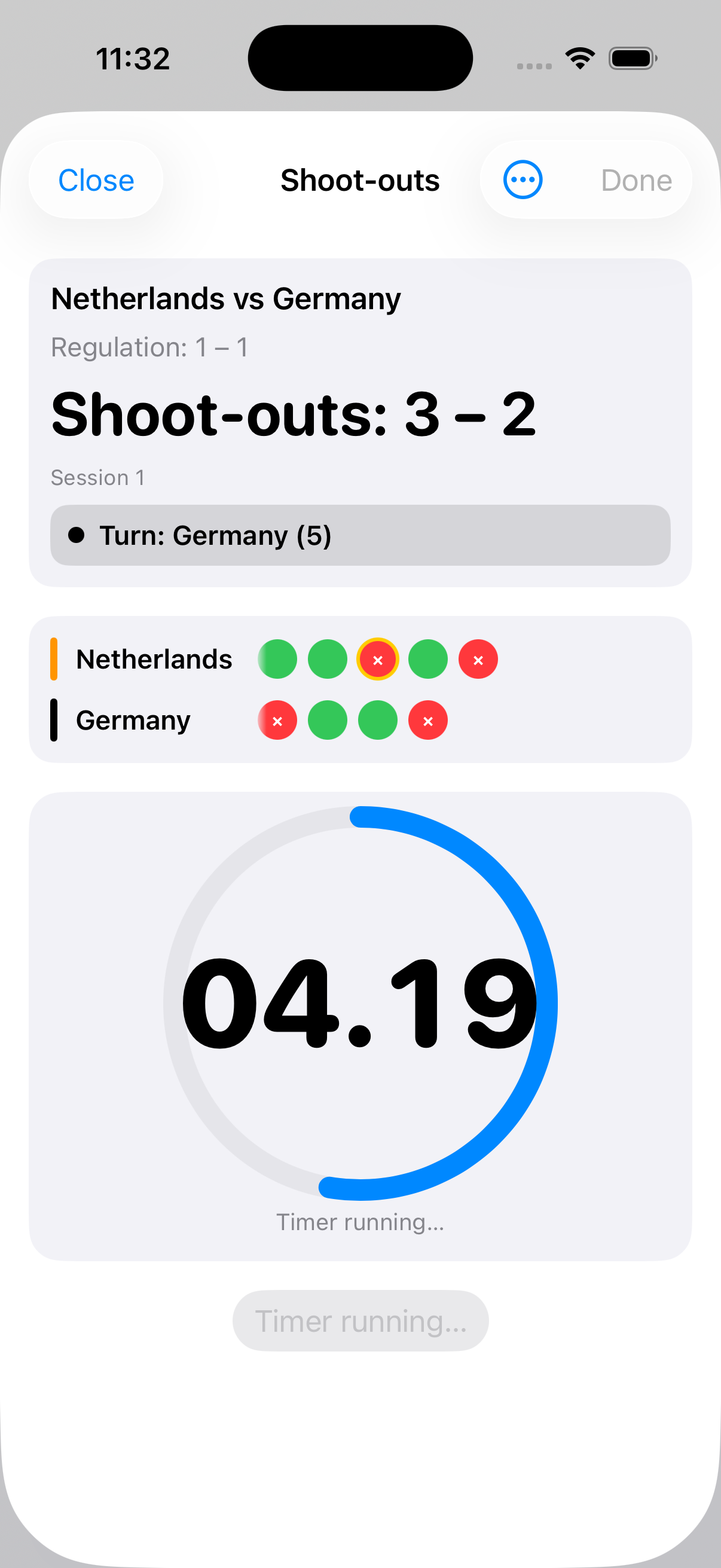
HockeyUmpire’s standalone iPhone shoot-out manager keeps the eight-second timer, score, turn and sudden-death sequence together. Shoot-outs are controlled on iPhone, including after a match run on Apple Watch. The precise visual countdown gives a clear vibration at 0:00 and, when the buzzer is enabled, an audible end signal. This helps the timing umpire keep their eyes on play and whistle when time expires. Choose the FIH profile or a custom format, then save the completed shoot-out to History.
The app is an optional aid—not an official timekeeper, rulebook or substitute for the competition regulations.
Try Quick Shoot-out free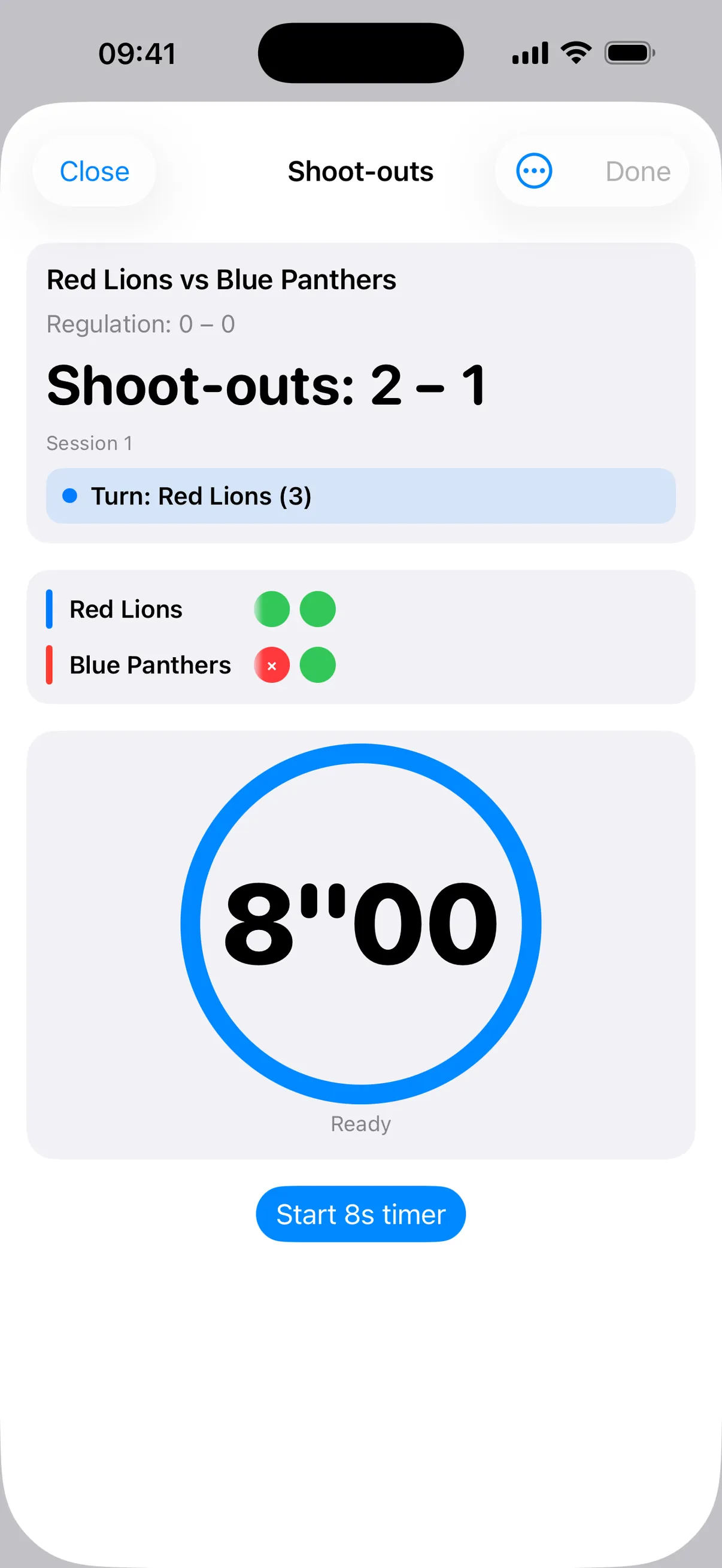
Checked on 2 October 2026. Use the latest version supplied for your competition.
Under the standard FIH tournament procedure, the attacker has eight seconds from the start signal. Always verify the regulations for your competition.
An unintentional defender offence normally means a retake. An intentional defender offence normally results in a penalty stroke.
Yes. Without a separate timekeeper, a practical allocation is for the lead umpire to whistle the start and follow the attempt, while the supporting umpire starts the eight-second clock on that signal and whistles at 0:00. Competition instructions remain decisive.
No. Quick Shoot-out is an optional iPhone tool for the timer, score, turn order and record, including after a match run on Apple Watch. It provides clear end-of-time feedback, but the official rules and competition regulations remain decisive.